
Fat freezing has become one of the most requested non-invasive body contouring treatments on spa and clinic menus. No needles, no incisions, almost no downtime, and the revenue per device stays strong because there are no consumables to restock.
Entry-level machines look similar on a spec sheet, but they do not perform the same way. Some hold temperature steady for years. Others drift, deliver uneven results, and cost a practice more in unhappy clients than the purchase price ever saved. This guide covers how the treatment works and which details to weigh before you spend.
What Is Cryotherapy?
In body contouring, cryotherapy means using controlled cold to reduce stubborn fat. It is a non-surgical alternative to liposuction, and it leans on the body’s own waste-clearing system to finish the job.
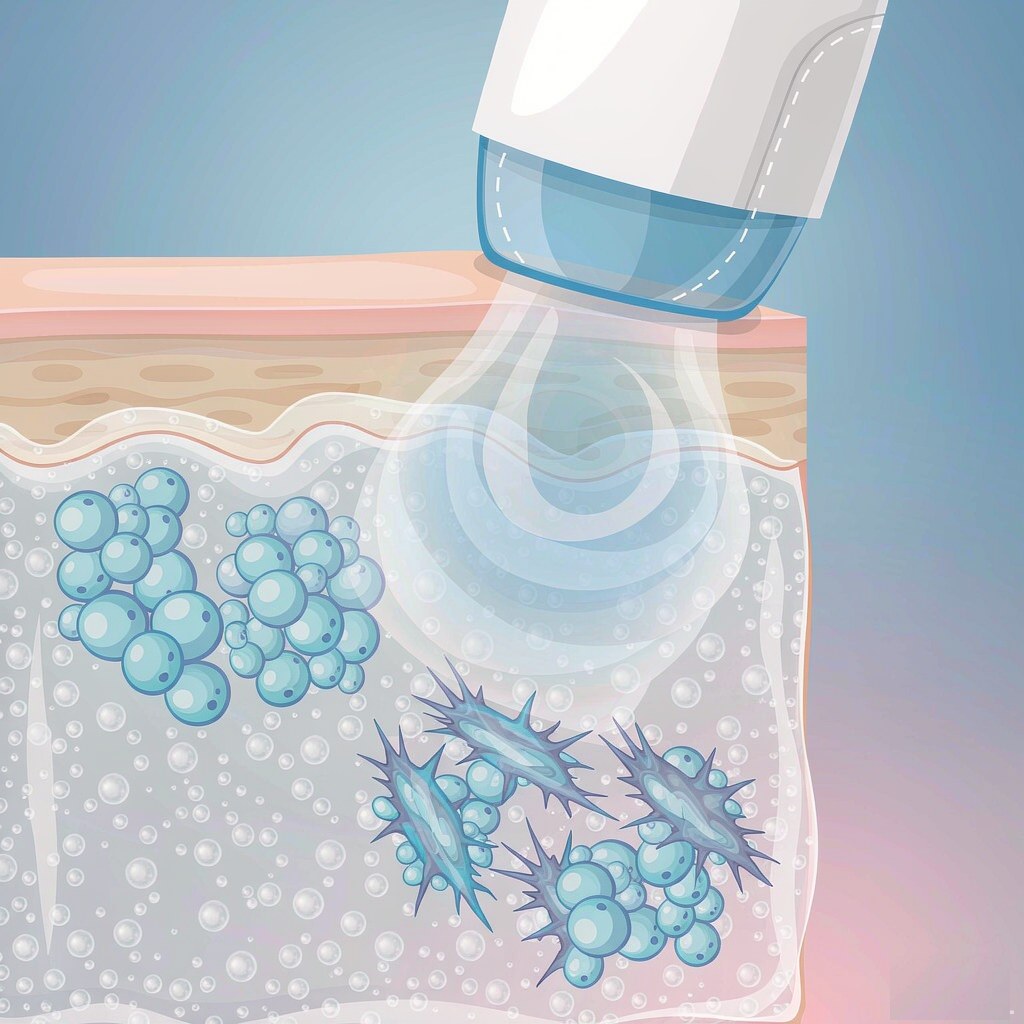
Fat cells respond to cold earlier than skin, nerves, blood vessels or muscle. When an applicator holds the fat at a precise temperature, the fat cells crystallize and begin to die through a process called apoptosis. Over the weeks that follow, the lymphatic system carries those dead cells away and the treated area thins out.
The word “precise” matters most here. The cold has to be strong enough to kill fat, yet gentle enough to leave the skin and surrounding tissue unharmed. Medical-grade machines hold that balance. Cheap machines get cold, but getting cold alone is not the same as holding a target temperature.
How Fat Freezing Machines Work
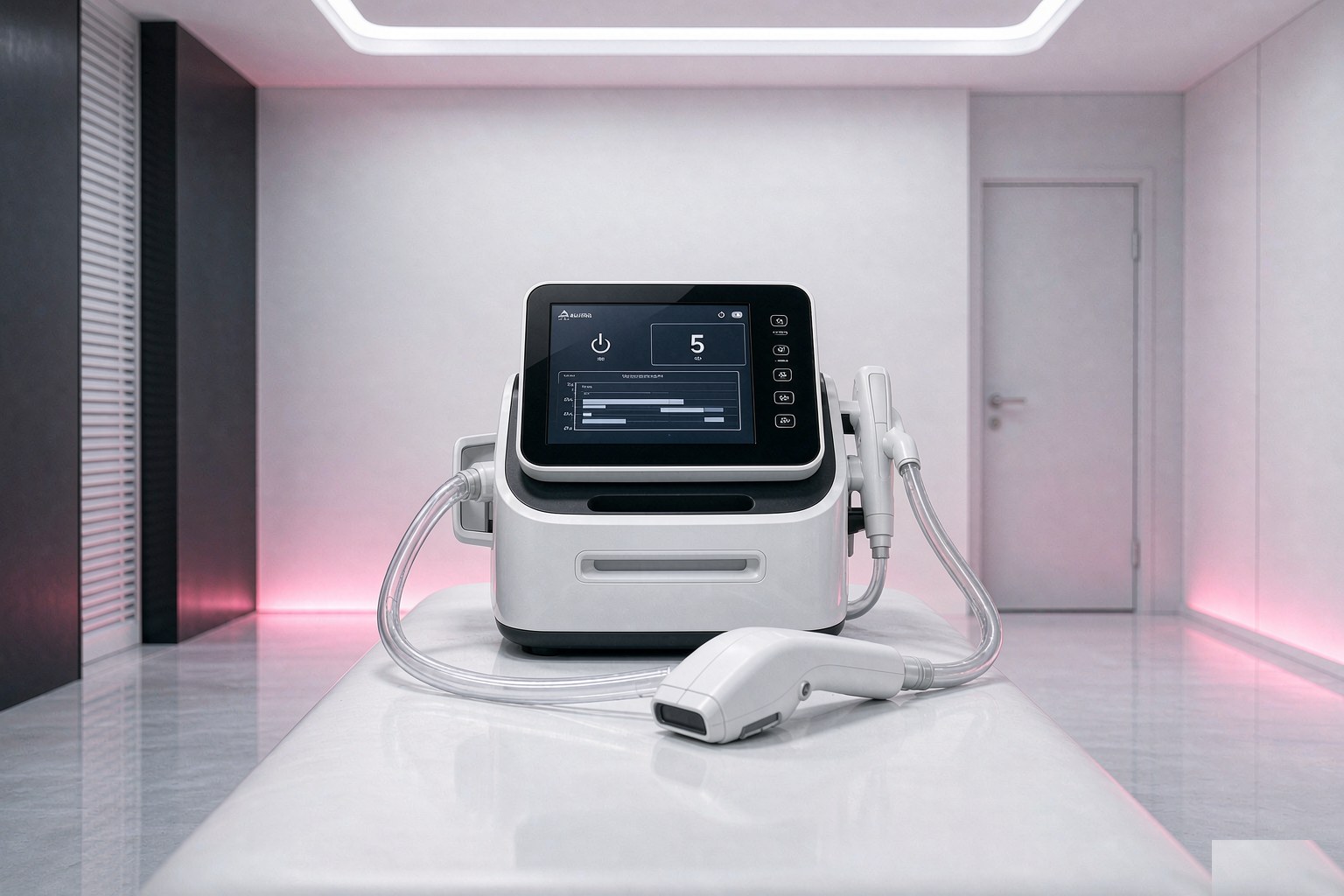
A fat freezing machine has three main parts: a control console, one or more treatment applicators, and a built-in safety system.
- Vacuum suction. The applicator draws the target tissue into a cup. This isolates the fat bulge, presses it against the cooling panels, and improves contact.
- Controlled cooling. The applicator brings the tissue down to the target temperature and holds it there, usually for 30 to 60 minutes per area.
- Monitoring. Sensors track skin temperature the whole time. If it moves outside the safe range, the machine adjusts or pauses on its own, which prevents frostbite and thermal injury.
Results take time because the body has to clear the dead cells itself. Most clients see a change from around week three, with the full result settling over two to three months. That gradual pace usually works in the clinic’s favor: the outcome looks natural rather than surgically abrupt.
What to Check Before You Buy
Cooling range and stability. Look for a machine that reaches and holds a stable low temperature, often -10°C or below at the applicator, with tight control. Stability protects the client and keeps results consistent from one session to the next.
Applicators. More applicators let you treat several areas at once, which raises throughput. Look for a spread of cup sizes so you can cover the abdomen, flanks, thighs, arms and chin. Interchangeable heads add flexibility without buying a second console.
Treatment time. Shorter, efficient cycles mean more clients per day. Compare the standard duration per area across the models you are shortlisting.
Safety features. Real-time skin temperature sensing, automatic over-temperature protection, freeze protection and an emergency stop should all be present. This is the part of the spec sheet you do not compromise on.
Certifications. For a device used on paying clients, check for CE and ISO certification, plus RoHS and FCC compliance where relevant. Certifications show the device meets international safety and quality standards, and local regulators or insurers often require them.
Build quality. A solid machine with a reliable cooling system lasts longer and needs less servicing. Ask which cooling technology is inside and what the expected service life is.
Cryotherapy vs Other Fat-Reduction Technologies
| Technology | How it works | Best for | Trade-off |
|---|---|---|---|
| Fat freezing (cryotherapy) | Controlled cooling triggers fat cell death | Localized, pinchable fat bulges | Results appear over weeks |
| Ultrasonic cavitation | Low-frequency ultrasound disrupts fat cell membranes | Softer, larger areas | Usually needs multiple sessions |
| Laser lipo | Laser energy heats and destroys fat cells | Small areas, mild skin tightening | Heat-based, less suited to large volumes |
| Radiofrequency (RF) | Deep heating stimulates collagen | Skin tightening, mild contouring | Mainly a tightening treatment |
CoolSculpting is a brand name for one type of fat freezing system. The underlying technology, controlled cooling of fat, is available from many manufacturers, and a properly certified machine can deliver comparable results at a fraction of the branded price. For a clinic, the brand name is optional. The engineering and build quality determine the results.
Safety and Side Effects
Done correctly with a certified machine, fat freezing is a safe, low-downtime procedure. It is not risk-free, and informed consent still matters.
Redness, bruising, numbness and mild soreness are common and temporary. They settle within days to a couple of weeks.
The rarer risk to know about is paradoxical adipose hyperplasia (PAH), where treated fat cells enlarge instead of shrink. It is uncommon, but staff should understand it and know how to screen for it. Precise temperature control and following the recommended protocol lower the risk of both PAH and skin injury.
Client selection matters just as much. Fat freezing suits people who are near their target weight with localized, stubborn fat. It is not a weight-loss treatment for obesity. Setting that expectation early protects the results and the clinic’s reputation.
How to Choose a Supplier
The machine is only half the decision. The manufacturer behind it matters equally.
- Manufacturing capability. A real factory, rather than a trading company, gives you control over quality, spare parts and customization.
- Certifications and documentation. Ask for the CE and ISO certificates and confirm they are current. A serious supplier shares them without hesitation.
- OEM/ODM options. If you want your own brand or a customized feature set, confirm the factory can handle it.
- After-sales support. Check the warranty, training and technical support. A machine is a long-term investment, and the support should match.
- Spare parts. Confirm the supplier can ship parts quickly, so a minor fault never turns into a revenue outage.
Ready to compare models? Browse the INWAAN cryotherapy machine range to see specifications and applicator options.
FAQ
Does fat freezing hurt?
Most clients feel an initial cold and a tugging sensation as the vacuum applies, then numbness. The treatment is generally well tolerated.
How many sessions do I need?
One session usually produces a noticeable reduction. Some clients add a second for more dramatic results, spaced weeks apart to let the body clear the fat.
How much fat can be reduced?
It varies by client and area, but a single session typically reduces the treated fat layer by a meaningful percentage. This is contouring, not weight loss.
How soon will clients see results?
Visible change usually starts around three weeks, with full results at two to three months.
Is fat freezing safe?
Yes, when a certified machine is used by trained staff. Temporary redness and numbness are normal; serious complications are rare with proper protocols.
How do I choose the right machine?
Prioritize temperature stability, applicator versatility, safety mechanisms and certifications, then pick a manufacturer with real factory capability and responsive support.
Ready to Add Fat Freezing to Your Clinic?
INWAAN builds professional cryotherapy machines with stable cooling, a range of applicator sizes, full safety protection and CE / ISO / RoHS / FCC certification. OEM/ODM customization and after-sales support are available for clinics and distributors worldwide.